
April 15, 2026
Bat Safety: What Children Should Know
This handout explains why children should never touch a bat, whether it is alive, flying, on the ground, or even dead. It also outlines the risk of rabies exposure and what to do right away if contact happens.
Click here to download the handout, or read below.
Whether it’s on the ground or flying around,
If it’s a bat, don’t touch that!
It is tempting to pick up a bat because they look so unusual.
Don’t do it! Leave bats alone.
Bats are helpful in nature. However, they also can spread rabies.
Rabies is a deadly disease caused by a virus. You can get rabies if an animal that has rabies bites you. Bat teeth are so small you might not even know you were bitten!
You can also get rabies if the saliva from an animal with rabies gets in your eyes, nose, or mouth. This can happen if you get the saliva on your fingers and then touch your face. Another way you can get rabies is by touching an animal with rabies and getting its saliva in open cuts on your skin.
Tell an adult, such as a teacher, nurse, parent, school guard, or police officer, right away if you have touched a bat or a bat has touched you. There is medicine that can keep you from getting rabies. For the medicine to work well, it must be given soon after contact with a bat.
Remember, if you find any bat, even if it is dead, do not touch it. Tell an adult right away about the bat and where you found it.
More about HRMC

Hospital Investments Yield Strong Patient Satisfaction Scores
Data reveals high marks from patients treated at Hereford Regional
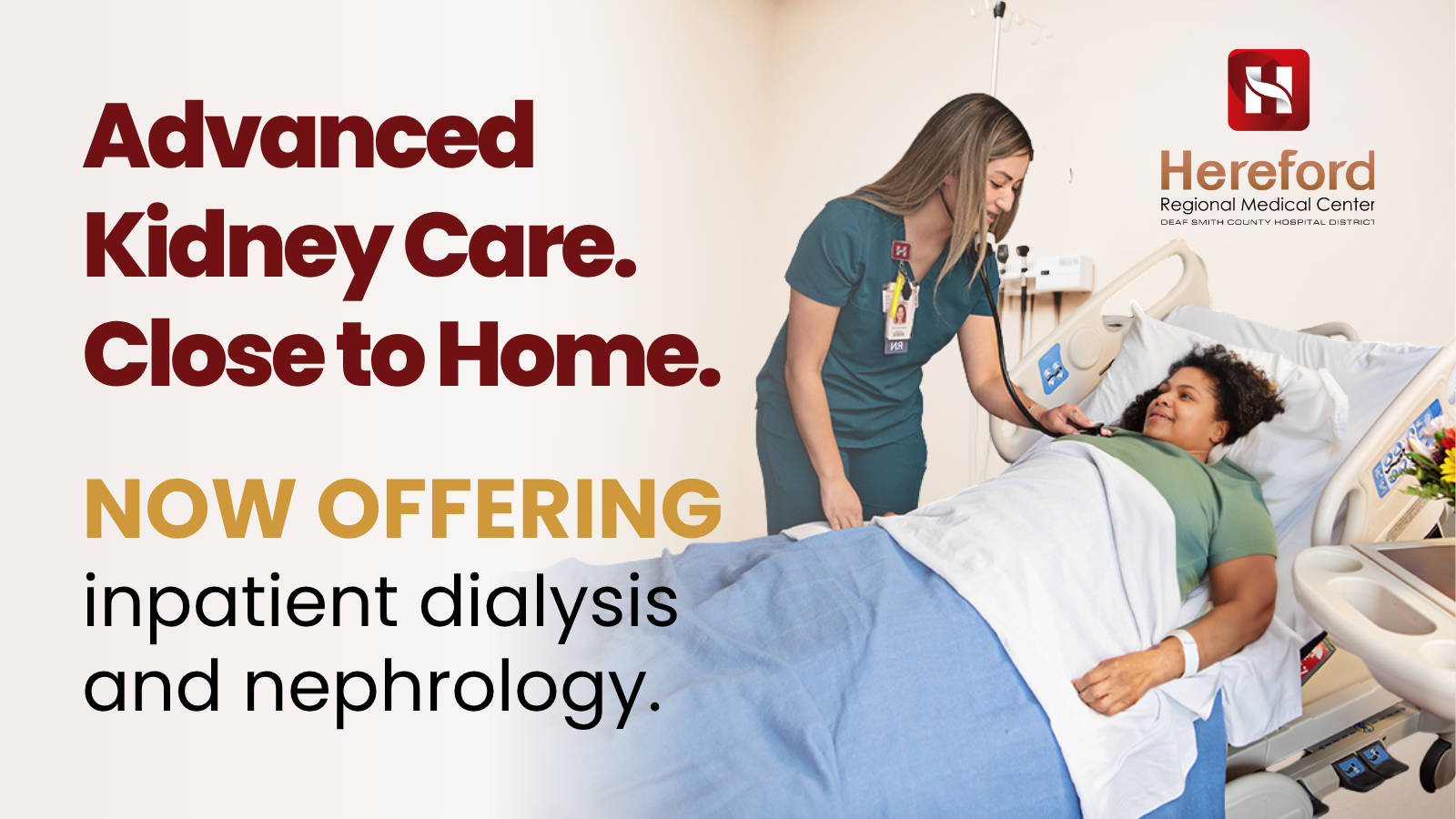
Bringing Kidney Care Closer to Home: How Telemedicine is Changing the Future of Dialysis at HRMC
For many patients living with kidney disease, getting the care
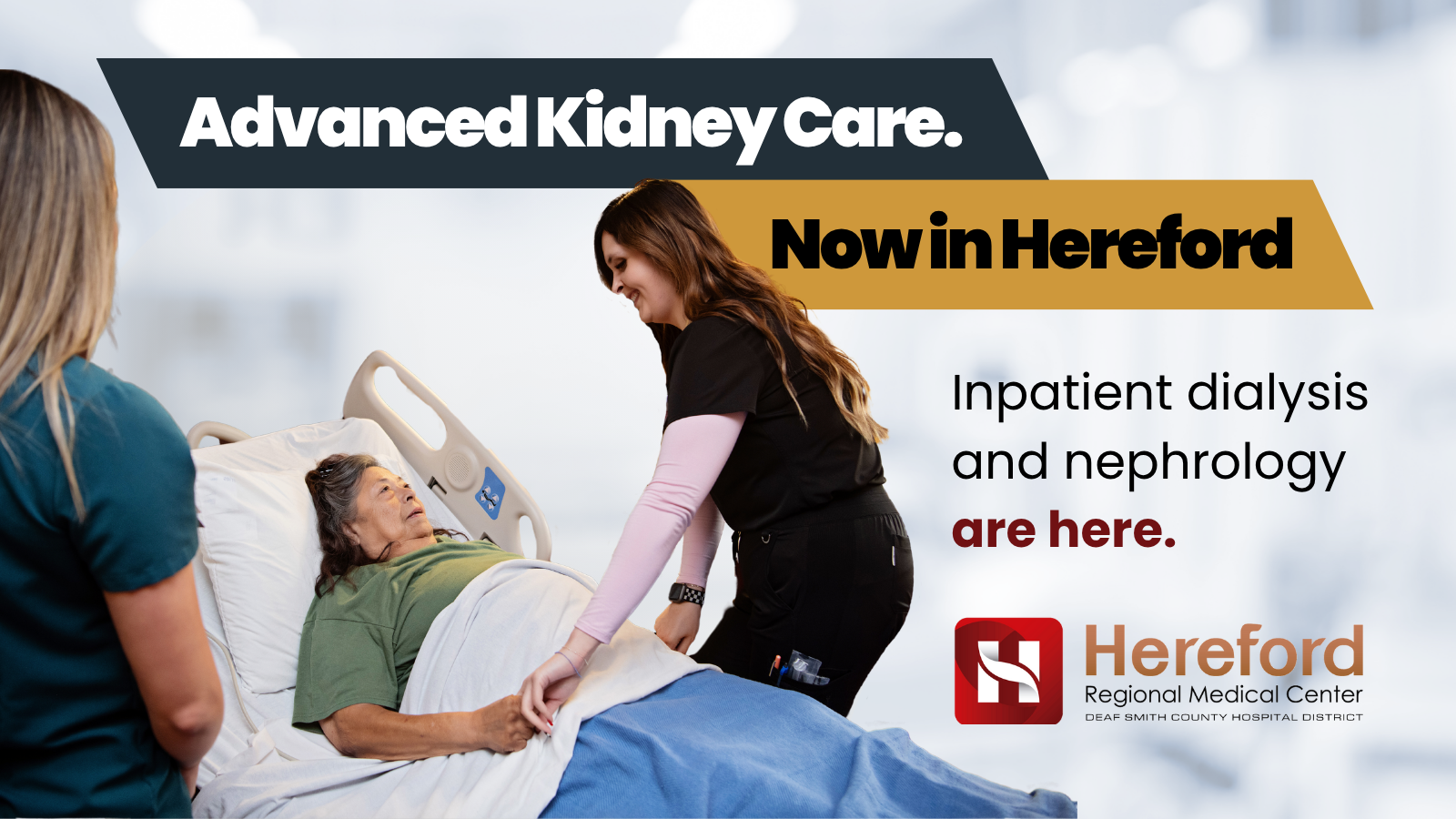
Inpatient Dialysis and Nephrology Services Now Available at Hereford Regional Medical Center
Hereford Regional Medical Center is expanding its specialty services, making